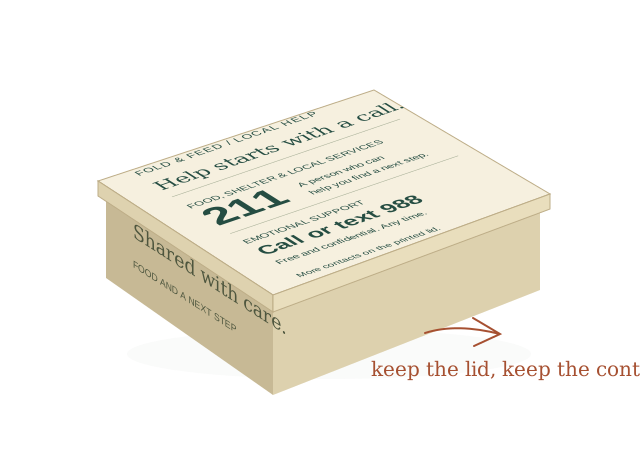
11 city editions + a U.S. starter. No account needed. Printed contacts work without a smartphone.
ONE BOX, TWO KINDS OF CARE
Food inside. A next step outside.made to share ↗
FOOD & ESSENTIALS✳SHELTER & HOUSING✳DRUG & ALCOHOL HELP✳NEIGHBOR TO NEIGHBOR
WHEN YOU NEED A HAND
A place to start.
Showing U.S. help contacts and a generic box. Choose your city for a local kit.
Local contacts in the central city. Call to confirm hours, eligibility and availability before traveling.
You can start with one call.
Call a number below and say: “I need help with food, a place to stay, or drug or alcohol treatment. Where can I go, when, and what should I bring?”
No phone? Take the printed lid to a public library, day center or outreach worker and ask for help making a call. If one service cannot help, ask for another option or call 211.
You are welcome to keep the food. Using these services is your choice.
See several local options for shelter, food and treatment. Choose how far to look.
Sources checked
More nearby help
Distances are estimates from the ZIP center, not walking routes. Call to confirm hours, eligibility, costs and availability. These extra options are on this page; your printable city box keeps its selected contacts.
No nearby options in this category yet. Try All help, a wider distance or the directories below.
Need another option? Call 211 for local referrals.
Need someone to talk to? Call 988 or text 988, 24/7.
Checked on provider websites September 30, 2026; providers have not been called. An intake or referral address does not guarantee a bed, meal or appointment.
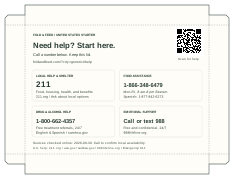
Turn two sheets of cardstock into a small box for wrapped food. The lid becomes a resource card someone can keep, with phone numbers, addresses and a QR code for their city’s help.
01
Print & fold
Print at actual size, cut the solid outline, fold the dashed lines, and tape the corner tabs.
02
Add food people can use
Choose sealed, ready-to-eat food, or put plain baked goods in a food-safe bag. Keep ingredient and allergen labels with it. See food ideas ↓
03
Offer, listen, respect
Ask whether food would be welcome. Point out the help numbers and QR code, let people choose, and respect a “no.”
Keep food away from the cardstock, printer ink and tape. Use original sealed packages, a closed food-safe bakery bag or a food-safe inner container. Choose food that travels well ↓
A LITTLE FOOD, PACKED WITH CARE
Food that travels well.
Choose ready-to-eat food that can be stored without refrigeration. Ask what someone would like and can comfortably eat.
COOKIES
Plain cookies keep well.
Shortbread, sugar cookies or plain oatmeal cookies are useful options. Choose recipes without cream, custard or other fillings that need refrigeration. Cool completely before closing a food-safe bag.
USDA’s general cookie-storage guidance assumes appropriate room-temperature storage. Heat, damp weather and an open box change those conditions, so share promptly and avoid promising weeks of outdoor storage.
SOFT BREADS
A softer option to offer.
Commercially packaged soft rolls or tortillas labeled for room-temperature storage may be easier to eat. Keep the original package and follow its dates and storage instructions.
Fresh homemade bread has a shorter useful life. Share it promptly, ideally the day it is baked; it is not the best choice for food someone needs to keep for several days.
CRISP OPTIONS
Offer a choice.
Sealed crackers or crisp plain cookies are convenient dry options. Biscotti can also be offered, but hard foods may be difficult for someone with dental pain. Bring a softer alternative.
A treat can be welcome alongside other food. Water and another ready-to-eat item can make the offer more useful; let the person choose.
Before you close the box
Keep food enclosed. Use an intact original package or a closed food-safe bag. Ordinary cardstock and home printer ink are not food-contact packaging.
Label it. Include ingredients, allergens, the bake or pack date, and storage directions. Keep commercial labels with the food.
Keep it simple. Skip cream, custard, cream-cheese, meat or other perishable fillings when you cannot keep the food safely chilled.
Share promptly. Keep food dry, away from heat and contamination. Do not offer spoiled food, and do not treat this box as storage protection.
A meal can meet an immediate need. A clear phone number can help someone take their next step.
Fold & Feed brings them together. Start small, listen to people receiving the boxes, and work with a local outreach group to learn what would be useful.
Eleven editions cover New York, Los Angeles, Chicago, Dallas, Houston, Atlanta, Washington, DC, Miami, Philadelphia, Phoenix and Seattle. Other cities receive the U.S. starter. Contacts focus on each central city. Confirm providers before distributing a batch, and build a test box to check fit and carrying strength.
 fold
fold